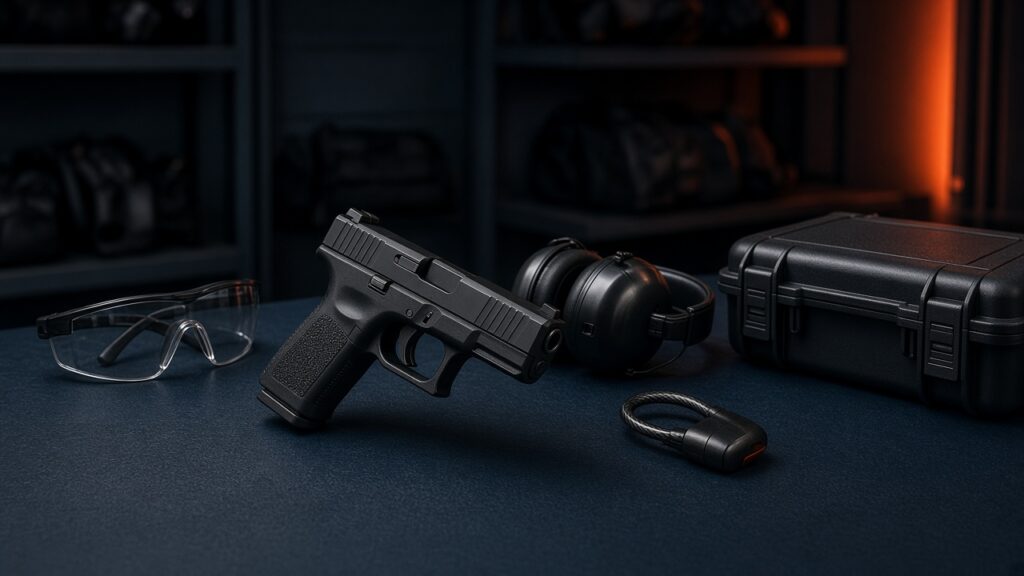
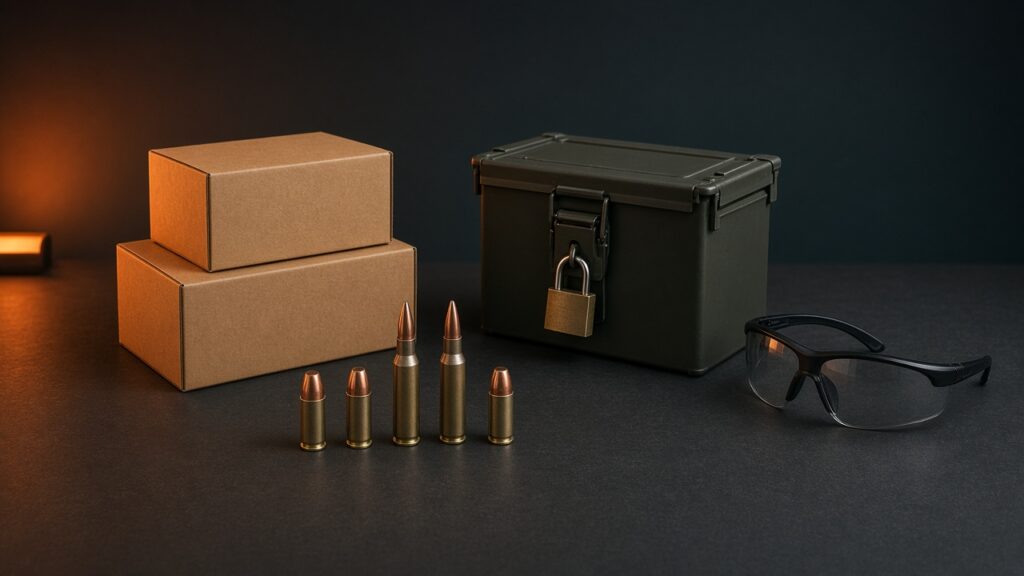
Ammunition labels pack a lot of information into a small space. Cartridge name, bullet weight, projectile type, pressure designation, and package count all matter—and similar-looking rounds are not necessarily interchangeable.
The safest starting point is simple: use only the exact ammunition identified by the firearm manufacturer. Check the barrel or chamber marking and the owner’s manual before buying or loading anything.
“Caliber” and cartridge name are not the same thing
Caliber generally describes a bullet or bore diameter, but a complete cartridge name identifies a specific case, dimensions, and pressure standard. Different cartridges can use similar-diameter bullets while being incompatible with one another. Never decide that a round fits based on appearance or diameter alone.
Use the full designation. Pay attention to suffixes and pressure markings such as “+P,” because not every firearm is approved for every load. If the owner’s manual does not clearly authorize it, ask the firearm or ammunition manufacturer.
Bullet weight: what “grain” means
Bullet weight is commonly measured in grains and shown as “gr” on the box. Within the same cartridge, lighter and heavier bullets can produce different recoil feel, velocity, point of impact, and function. A heavier bullet is not automatically more powerful or more suitable.
When changing bullet weight or load, confirm reliable function and point of impact at a supervised range before relying on it for a particular lawful purpose.
Common handgun and rifle bullet types
- Full metal jacket (FMJ): Common for routine range practice because it feeds reliably in many firearms and is often economical. Range rules may restrict certain projectile materials.
- Jacketed hollow point (JHP): Designed to expand under suitable conditions. Performance varies by cartridge, barrel length, and specific load, and laws can vary by location.
- Soft point: Frequently used in lawful hunting loads where controlled expansion is desired. Species and jurisdiction rules determine what is allowed.
- Open-tip match (OTM) and match bullets: Built with accuracy in mind; construction and intended use should not be assumed from appearance alone.
- Lead-free and specialty projectiles: May be required in some hunting areas or selected for a specific range or field use. Verify current rules before buying.
Marketing labels are not a substitute for the manufacturer’s technical information or current hunting and carry laws.
Shotgun shells require the same attention
Match the gauge and shell length to the markings on the shotgun and its manual. A shell that can be inserted is not necessarily safe to fire. Shot size, payload, velocity, and material should match the lawful activity and the firearm’s choke and barrel guidance.
For hunting, check the current regulations for the species and location. Shot material, capacity, legal methods, and season rules can change.
Factory ammunition, remanufactured ammunition, and reloads
New shooters generally benefit from starting with reputable factory ammunition that matches the firearm manual. Remanufactured ammunition and handloads introduce additional variables. Some firearm warranties, ranges, or shooting programs place restrictions on them.
Handloading requires dedicated equipment, verified published data, careful component identification, and disciplined quality control. It is not something to improvise from an online recipe.
Inspect ammunition before use
Do not use cartridges or shells that are heavily corroded, crushed, split, deeply dented, contaminated, or otherwise questionable. A bullet pushed unusually far into or out of the case can change pressure and should not be fired. Keep suspect ammunition separate and ask the manufacturer or a qualified professional about safe disposal.
If a firearm produces an unusual sound, recoil, smoke pattern, or failure, stop. Keep the muzzle in a safe direction, follow the firearm and range procedures, and have the firearm checked before continuing. Never fire another round into a barrel that may be obstructed.
Store ammunition cool, dry, organized, and secured
- Keep ammunition in its original labeled packaging whenever practical.
- Store it in a cool, dry location away from heat, flame, moisture, and household chemicals.
- Use locked storage that prevents access by children and unauthorized people.
- Keep different cartridges and loads separated so they cannot be confused.
- Rotate older stock and inspect packaging for moisture or damage.
- Follow local fire code and storage rules for the quantity you keep.
Before you buy
- Read the firearm’s caliber or gauge marking and owner’s manual.
- Write down the complete cartridge or shell designation.
- Choose a load suited to the lawful activity and location.
- Check range, hunting, transportation, and storage rules.
- Test a modest quantity before buying in bulk.
For new-owner fundamentals, review the four rules of firearm safety and our updated guide to buying your first firearm in Texas. Product availability changes, so check the current shop or contact Send It Outfitters if you need help matching a manufacturer-listed cartridge to a firearm.