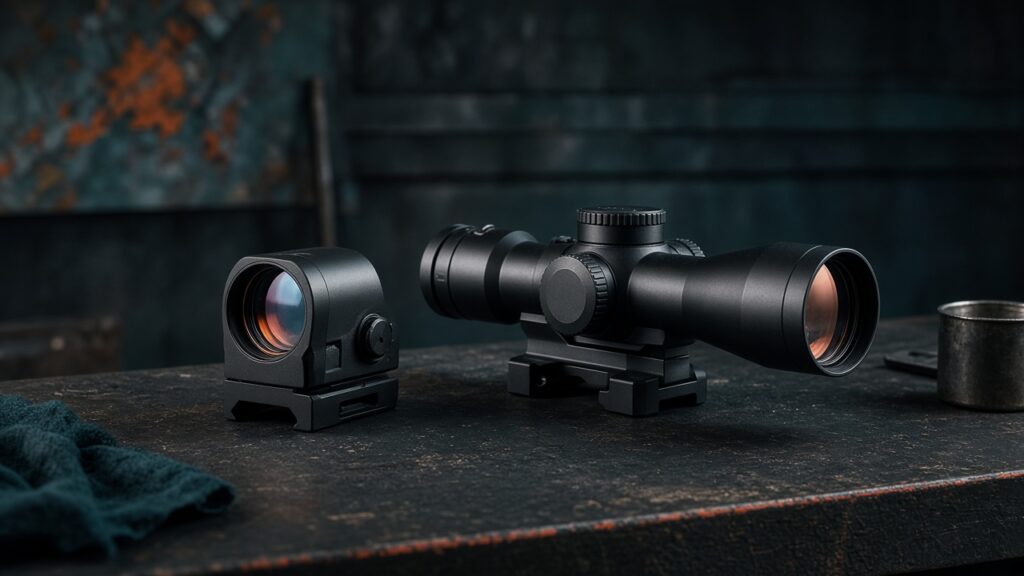
A red dot, low-power variable optic (LPVO), and traditional magnified scope solve different problems. The right choice depends on distance, target size, lighting, firearm compatibility, eyesight, and how much weight and complexity you want to add.
This guide covers the practical differences so you can make sense of the options in the Send It optics catalog.
Red-dot sights: simple, fast, and unmagnified
A red-dot sight projects an illuminated aiming point that appears on one optical plane. Most models offer no magnification, a broad field of view, and unlimited or forgiving eye relief. They are common on handguns, carbines, and some shotguns when fast target acquisition at shorter distances is the priority.
Look beyond dot size and price. Compare battery access, automatic brightness behavior, manual controls, waterproof rating, housing design, night-vision settings if genuinely needed, and the mounting footprint. On a handgun, confirm that the slide cut, plate, screws, and optic are all compatible.
A red dot does not replace fundamentals. New users often need practice finding the dot consistently, and iron sights may still serve as a useful backup where the setup supports them.
LPVOs: one optic across a useful magnification range
An LPVO typically starts near 1x and increases to a moderate magnification. At low power it can feel quick and open; at higher power it helps with target identification and precision. That flexibility makes LPVOs popular on general-purpose rifles.
The tradeoffs are weight, size, eye-box sensitivity, and more moving parts. A true, comfortable low-power view, usable reticle illumination, and consistent eye position matter more than the largest magnification number printed on the box.
Traditional scopes: precision and a clear view at distance
A conventional hunting or target scope usually starts above 1x and prioritizes magnification, optical clarity, and a precise aiming reference. It is often the practical choice when the expected shot or target is farther away and the firearm will be used from a stable position.
Compare the full magnification range, objective size, reticle, adjustment system, parallax setup, eye relief, field of view, and low-light performance. More magnification is not automatically better: it narrows the field of view, magnifies movement, and can add weight and cost.
Reticle and adjustment choices
Reticles range from a simple duplex or dot to detailed hash-mark systems. A simple reticle is easy to read; a more detailed reticle can support measured holds when the shooter has verified what the marks represent. Match the reticle and adjustment units—typically MOA or MRAD—so corrections are easier to understand.
Exposed turrets are convenient when adjustments are made regularly. Capped turrets reduce the chance of accidental movement on a hunting or utility rifle. Neither style makes up for an optic that has not been mounted and confirmed correctly.
Mounting is part of the system
Before ordering, check the firearm’s mounting interface, ring or mount diameter, required height, available rail space, and eye-relief needs. Confirm that the mount does not interfere with firearm operation. Use the optic and mount manufacturers’ instructions and torque specifications; over-tightening can damage components, while under-tightening can allow movement.
After mounting, have the setup bore-sighted or start at a safe close distance according to a qualified range’s procedure, then confirm the final zero with the exact ammunition you intend to use. Recheck mounting hardware and zero after transport, a hard impact, or a major ammunition change.
Durability and ownership details
- Weather resistance: Look for clear water-resistance or waterproof specifications, not vague “all-weather” language.
- Battery plan: Know the battery type, expected life, replacement schedule, and whether changing it disturbs the mount.
- Lens protection: Use clean air and a lens-safe cloth; grit rubbed across a lens can damage coatings.
- Warranty and service: An optic is equipment that may need repair. Manufacturer support matters.
- Weight: Include the mount when comparing total weight.
Quick decision guide
- Choose a red dot when compact size, an unmagnified view, and fast acquisition are the main priorities.
- Choose an LPVO when one rifle needs a low-power view plus moderate magnification.
- Choose a traditional scope when magnification, precision, and target detail matter more than close-range speed.
There is no universal winner. Start with the firearm and realistic use, then compare compatible equipment. Browse current optics or ask Send It Outfitters to help check compatibility before you order.