A first range trip goes better when the safety habits are already boring. The range officer’s commands, your eye and ear protection, and ammunition that matches the barrel matter more than a new target stand.
Four habits before you leave the house
Keep the muzzle pointed in a safe direction the entire time the firearm is out of the case. Keep your finger off the trigger until the sights are on the target and you have decided to shoot. Keep the firearm unloaded until you are on the firing line and the range is hot. Know what is behind the target, not only what the target is. Those four habits are the whole trip. Gear does not replace them.
Practice them at home with an unloaded firearm and no ammunition in the room. Open the action, look and feel the chamber, and close the case again. If you are new to the gun, read the owner’s manual before the drive. Ruger’s safety instructions are one public example of how a manufacturer writes those rules down.
What to pack
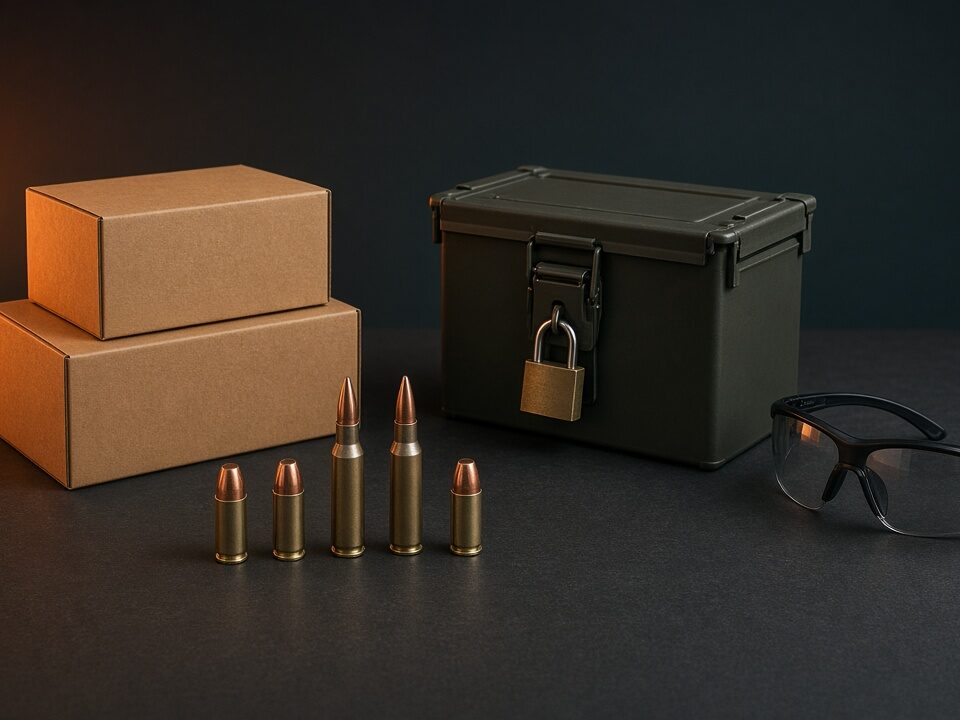
Eye protection and ear protection go on before you step to the line, not after the first shot. Bring a case that closes. Bring only the ammunition that matches the stamp on the barrel. Our ammunition basics article is the checklist for reading a box, and the ammo category is where matching cartridges are listed. A simple target, a stapler or pasters if the range allows them, water, and a pen for the sign-in sheet cover most first visits.
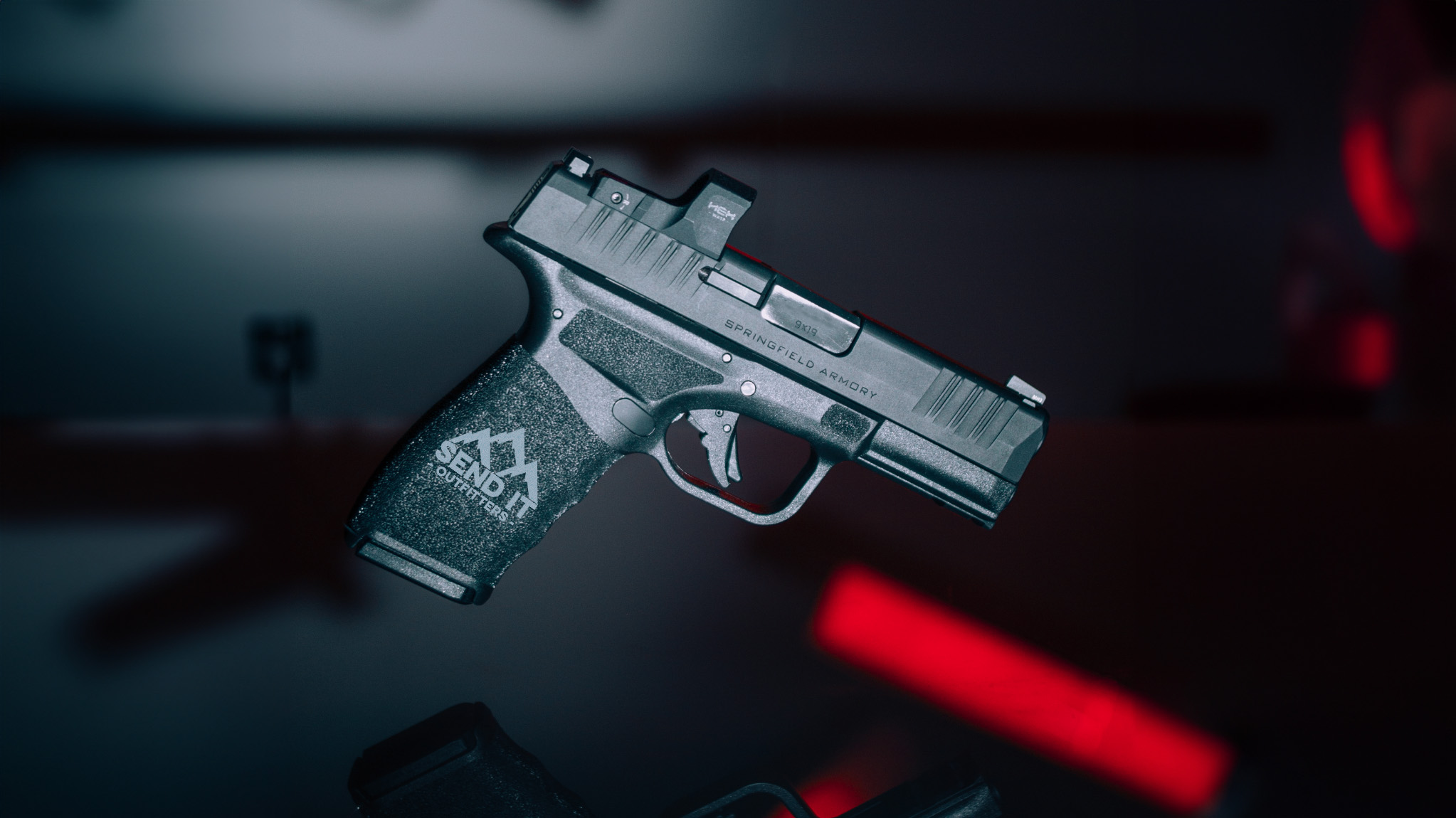
Leave unneeded magazines and loose cartridges in the bag until you are at the bench and the range is hot. A cluttered bench is how the wrong box gets opened. If you are bringing a handgun, the handgun category and the handgun buyer’s guide can help you name what you own. The range cares about the firearm you brought, not the one you might buy later.
Cold range, hot range, and the words in between
Most ranges use a cold range or a cease-fire to let people go forward of the line. During that time, firearms are unloaded, actions are open, and people stay away from the bench. The exact words differ. Listen to the briefing and ask if you miss a command. Guessing is how someone handles a gun while people are downrange.
When the range is hot, you may load and fire from the firing line only, in the lane you were given. Do not draw from a holster unless that range allows it and you have practiced the draw with an unloaded gun. Do not police another shooter’s lane. Tell a staff member if something looks wrong.
Etiquette that keeps the line calm
Uncase and case on the firing line if that is the range rule, with the muzzle downrange. Do not handle anyone else’s firearm without an invitation. Pick up your targets and hulls if the range asks you to. Give the shooter next to you a little space, especially if you are new and still finding the safety.
Project ChildSafe is a storage and safety program worth reading before a first gun spends time at home between range days. The range is a supervised place. Home is not. A lockbox is part of the trip, not an extra.
If you want a walkthrough first
Tell the shop it is a first range trip when you get in touch. Name the firearm, the cartridge, and whether you already have eye and ear protection. A short conversation beats discovering a mismatch at the bench.