The best handgun is not the one with the loudest marketing. It is the one a lawful owner can operate safely, shoot accurately, maintain, and secure for its intended role. Two handguns can share the same caliber and still feel completely different because of grip shape, trigger reach, controls, weight, and sights.
Use this guide to build a short list before you browse Send It’s handgun selection.
Start with the purpose
A handgun chosen for range practice may prioritize a comfortable full-size grip, longer sight radius, and softer recoil. A model intended for lawful concealed carry may place more weight on size, weight, and how safely it works with a proper holster. A home-defense handgun may need to work for more than one trained adult while remaining secured from unauthorized access.
Write down the primary use first. Trying to make one handgun perfect for every role usually produces unnecessary compromises.
Fit is more than grip size
With the handgun verified unloaded and handled under a dealer’s direction, check the following:
- Trigger reach: Can you place your finger correctly without twisting your grip?
- Control access: Can you reach the magazine release, slide stop, safety, or decocker without losing control of the handgun?
- Grip support: Can both hands establish a repeatable grip without crowding each other?
- Slide operation: Can you safely cycle and lock the slide using the manufacturer’s recommended procedure?
- Sight picture: Are the sights easy for your eyes to acquire in normal lighting?
Interchangeable backstraps can help, but they cannot correct every mismatch. If possible, handle several options and rent or test-fire finalists at a supervised range before buying.
Understand the size tradeoff
Small, light handguns are convenient to carry, but they often have less grip area, more felt recoil, and controls that are harder to manipulate. Larger handguns are generally easier to grip and practice with, but they are heavier and require more planning to carry discreetly.
Do not choose by category name alone. “Compact” and “micro-compact” are marketing terms, not universal dimensions. Compare actual height, length, width, weight, and magazine configuration.
Choose a caliber you can practice with
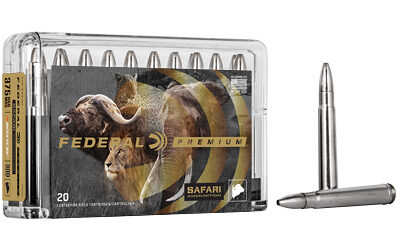
Caliber affects recoil, capacity, firearm size, and ammunition cost, but caliber alone does not determine whether a handgun is right for you. Reliable function, safe handling, accurate shot placement, and regular practice matter more than chasing a specification you cannot comfortably control.
Before choosing, read our ammunition basics guide and confirm the exact cartridge marked on the firearm and in its owner’s manual.
Compare actions and controls
Common semi-automatic handguns may use striker-fired, single-action, double-action/single-action, or double-action-only systems. Revolvers introduce their own loading, trigger, and capacity considerations. Each system has a different manual of operation.
External manual safeties, grip safeties, decockers, and internal safeties are not interchangeable features. Learn exactly what each control does—and does not do. No mechanical safety replaces safe muzzle direction, trigger discipline, proper storage, and training.
Look closely at sights and optics compatibility
High-contrast iron sights can be easier to see than a plain black arrangement. An optics-ready slide can make sense if you plan to add a compatible red dot, but footprints, adapter plates, screw lengths, and sight height vary. Our practical optics guide explains the major choices, and the current optics catalog shows what is available.
Budget for the complete setup
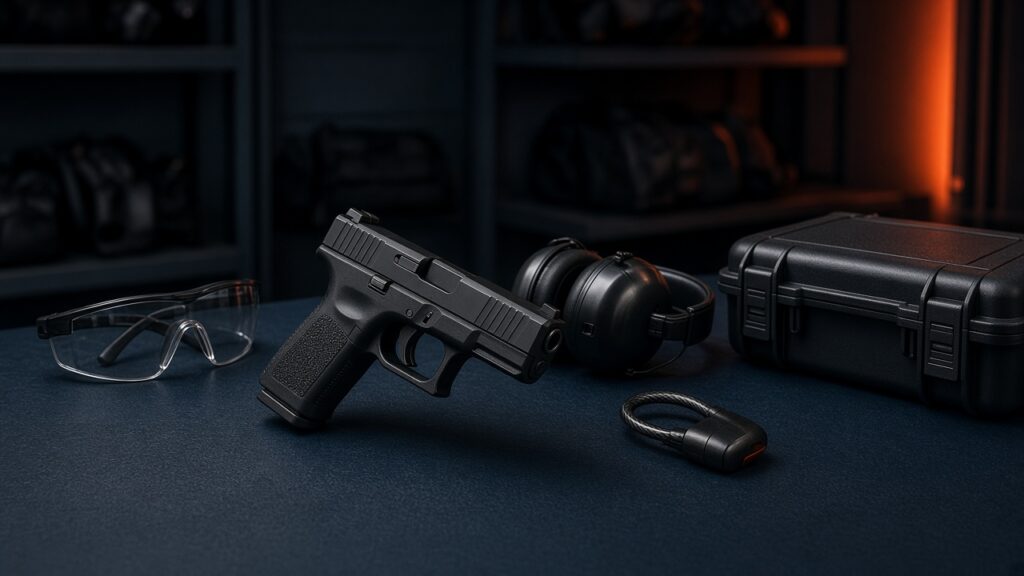
The purchase price is only part of responsible ownership. Plan for:
- A locked storage solution appropriate for your household
- A rigid holster that fully protects the trigger guard if the handgun will be carried
- Eye and ear protection
- Quality practice ammunition and, where lawful and appropriate, purpose-selected ammunition
- Cleaning supplies and replacement wear items recommended by the manufacturer
- Professional instruction and regular practice
A simple short-list method
- Define the primary role and non-negotiable size limits.
- Choose a manageable caliber with obtainable practice ammunition.
- Handle several models and eliminate those with poor fit or inaccessible controls.
- Compare reliability history, manufacturer support, magazines, holsters, and replacement parts.
- Test-fire the finalists when possible.
- Arrange secure storage before bringing the handgun home.
If you are buying for the first time, continue with Buying Your First Firearm in Texas. When you are ready to compare options, talk with Send It Outfitters. We will help you focus on fit and intended use, without pretending one model is right for everyone.